Safer, easier bathrooms for later life
Clear, independent guides to walk-in baths, level-access showers, wet rooms and bathroom aids — for older people, disabled people and the people who care for them.
Not sure where to start? Answer 10 short questions about how you manage now. We will explain which options may suit you, and why.
Find out which option may suit meOr go straight to help with costs, bathroom aids or all our guides.

Four steps to a bathroom that works for you
-
Ask your council for an assessment
An occupational therapist (OT) can visit you at home, see how you manage, and recommend what would help. In England, a home assessment from the council is free.
-
Look at your options
A few grab rails may be enough. Or you may need a walk-in bath, a level-access shower or a wet room.
-
Find out what help you can get with the cost
Grants, VAT relief and charities can help. What you can get depends on where you live and your situation.
-
Choose an installer carefully
Get more than one written quote, check the company, and never feel rushed into signing.
Walk-in bath, level-access shower or wet room?
Each one suits different needs. This is a quick comparison — our guides explain each option in full.
 Walk-in bath Walk-in bath |
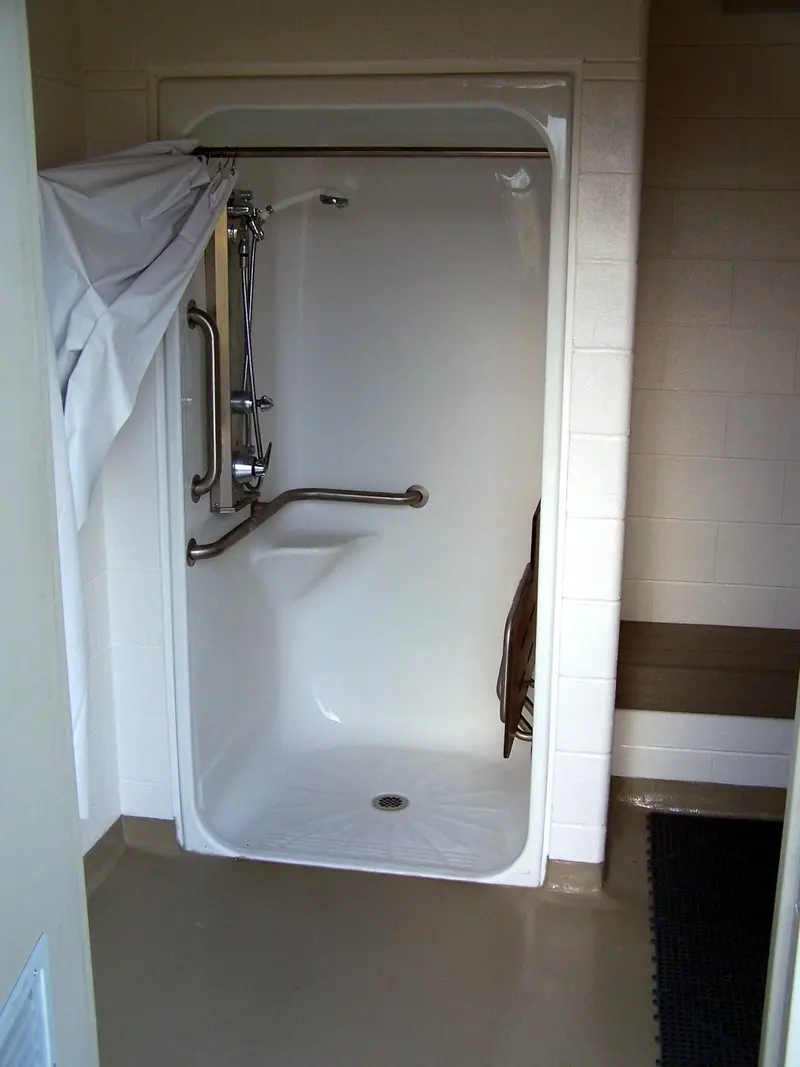 Level-access shower Level-access shower |
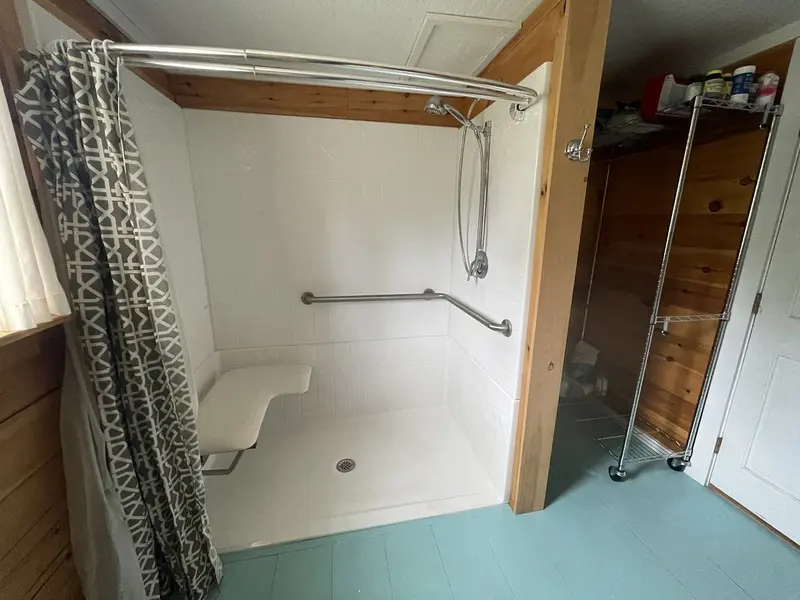 Wet room Wet room |
|
|---|---|---|---|
| Getting in | Through a door in the side of the bath, over a low step. | No step at all, or a very low lip on a shallow tray. | No step. The shower is part of a level floor. |
| Sitting to wash | Many have a built-in seat. | Fixed, fold-down or free-standing shower seat. | Shower seat, or a wheeled shower chair that rolls in. |
| A soak in the bath | Yes. | No. | No. |
| Room for a carer | Less: a carer helps from outside the bath. | Some, more with half-height doors or a curtain. | The most room. |
| Building work | Replaces your bath. | Replaces your bath or old shower. | The most work: the floor is waterproofed and sloped to a drain. |
| Good to know | You stay in the bath while it fills and while it empties. | Ask for a seat and grab rails in the plan. | More of the room can get wet. |
| Read more | Walk-in baths explained | Level-access showers explained | Wet rooms explained |
Photos: Walk-in bath — Photo: gemteck1, CC BY 2.0; Level-access shower — Photo: vastateparksstaff, CC BY 2.0; Wet room — Photo: yvthzwli86, CC0.
The help you can get depends on where you live
Grants for adaptations work differently in each part of the UK. Disabled people may also pay no VAT on adapting a bathroom.
England
Free aids and small adaptations after a council assessment, and a Disabled Facilities Grant from your council for bigger work.
Disabled Facilities Grants explainedWales
A Disabled Facilities Grant and the ENABLE scheme through your council. Contact your landlord if you rent.
Grants in WalesScotland
No Disabled Facilities Grant. Councils give grants for essential adaptations under their scheme of assistance.
Help with costs in ScotlandNorthern Ireland
Start with the occupational therapy service at your Health and Social Care Trust. Bigger work may get a Disabled Facilities Grant.
Grants in Northern IrelandPopular guides
-
 Bath, shower or wet room: how to choose
A plain comparison of keeping your bath with some aids, a walk-in bath, a level-access shower and a wet room — and the questions that help you decide.
Photo: LakeMartinVoice, CC BY 2.0
-
Disabled Facilities Grants explained
A Disabled Facilities Grant (DFG) can pay for changes such as a level-access shower. How much you can get, who can apply and how it works in England, Wales and Northern Ireland.
-
Getting an occupational therapy assessment
An occupational therapist (OT) can visit you at home, see what you find hard, and recommend what would help. How to ask for an assessment from your council in each part of the UK, and how to find a private OT.
-
 Free equipment and small adaptations
In England, the council must provide aids and minor adaptations costing £1,000 or less free of charge if your assessment shows you need them. How to ask, and what happens in the rest of the UK.
Photo: Ashashyou, CC BY-SA 3.0
-
Help with adaptation costs in Scotland
Scotland does not have Disabled Facilities Grants. Instead, councils give grants for essential adaptations under a "scheme of assistance". How it works and how to start.
-
How to choose an installer
How to find a trustworthy company to fit a walk-in bath, shower or wet room — trader schemes, quotes, contracts, deposits and the warning signs of a bad trader.
-
Walk-in baths: what they are and who they suit
A walk-in bath has a door in the side, so you step over a low threshold instead of climbing over the side of the bath. How they work, the different types, and the downsides to know about.
-
Questions to ask installers
A printable checklist of questions to ask before you agree to a walk-in bath, shower or wet room — so you can compare quotes fairly and avoid surprises.
-
VAT relief on bathroom adaptations
Disabled people can have a bathroom adapted for their needs without paying VAT. People aged 60 or over pay 5% VAT on some items, such as grab rails, bath lifts and walk-in baths. The rules, and the forms you need.
Bathroom aids that can help now
You may not need building work at all. A grab rail, a shower seat or a raised toilet seat can make a real difference — and in England, small aids are free if the council’s assessment shows you need them.
Before you buy anything
Ask your council for an occupational therapy assessment. An OT can check what is safe for you and where rails should go — and may be able to provide the equipment.